
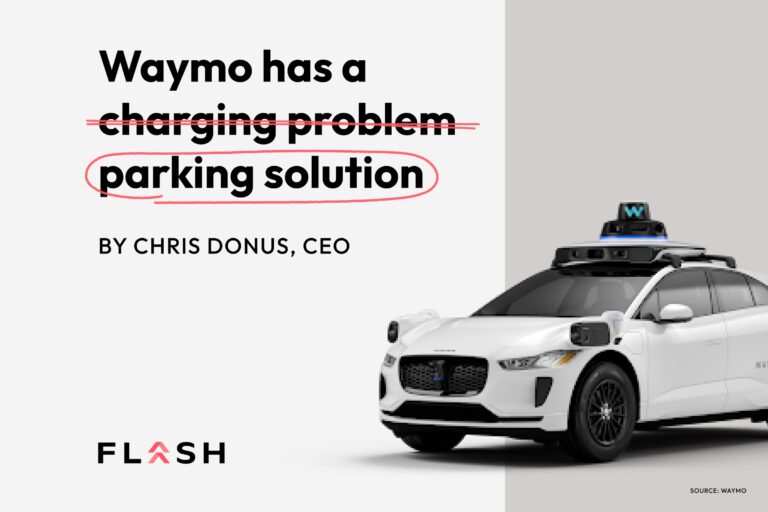
The LA Times and InsideEVs recently reported on Waymo’s overnight charging operations in Santa Monica racking up complaints from neighbors for operations “constituting a public nuisance.” Accounts of residents losing sleep over beeping sensors, cleaning crews, and the constant churn of dozens of autonomous vehicles (AVs) returning to charge between 11 p.m. and 6 a.m. is more than a local zoning dispute – it’s a preview of the friction that will define the next decade of urban mobility.
InsideEVs’ report, titled “Waymo Has a Charging Problem,” raises a simple and urgent question: as autonomous fleets scale, where do they live — and where do they charge — in a way that works for cities and communities?
AV reality check
The inescapable reality of welcoming AVs to city streets is that they need to charge and stage close to their service areas and with that comes deadhead miles, round-the-clock operations that don’t align neatly with typical neighborhood quiet hours, and reliance on high-density charging with dozens or ultimately hundreds of ports in a single node. All of this amplifies noise, traffic, and lighting if sited poorly.
Putting that kind of operation in the middle of a residential block produces exactly the conflicts Santa Monica is now experiencing: friction, complaints, and political pressure.
But cities are full of existing, strategically located parking assets — garages, mixed-use structures, commercial lots, and entertainment venues — poised to serve as AV-ready depots. They boast:
- Physical buffering from homes in structured garages and commercial parking lots are typically sited away from purely residential streets;
- Enclosed or semi-enclosed environments that contain and control sound, lights, and operations;
- Ready power and familiar access patterns in spaces that in many cases are already being upgraded for EV charging and can be further scaled for fleet use; and
- Managed ingress/egress in state-of-the-art facilities with camera-enabled operations and open API platform integrations that allow traffic flow to be designed, not improvised.
Waymo’s parking solution
Rather than building new facilities or paving over new land to support AV fleets, we can repurpose and upgrade the parking infrastructure we already have. The conversation around AVs has already produced a charging quandary, and it’s only a matter of time before congestion joins the list of concerns and shifts from “Are they safe?” to “Will they clog our streets?”
Pivoting to parking as a solution can help cities and AV fleet operators stay a step ahead. Here’s how:
Map AV demand to existing parking supply: Cities know where traffic, nightlife, and employment produce the greatest density. Parking owners know where underutilized capacity exists. Bringing that data together can identify the best candidates for AV-ready charging and staging hubs.
Update codes and incentives for “mobility-ready” parking: Zoning, permitting, and incentives should encourage charging in existing garages and commercial lots with clear design standards for noise, light, and traffic impacts. Reward shared, multi-use infrastructure rather than single-fleet depots.
Pilot AV-ready hubs now — not later: Autonomous fleets are scaling today, not in some distant future. Cities, property owners, parking operators, and fleet providers should seize the opportunity to launch targeted pilots in strategic garages. These pilots would dedicate zones or levels for AV staging and charging and offer integrated access via APIs so fleets can book, charge, and pay autonomously. The data the pilots gather will also enable transparent reporting to partners and communities on utilization and neighborhood impact.
At Flash, we believe parking is one of the most powerful levers we have to shape how cities move. Waymo may have a charging problem today — but the truth is we all have an infrastructure opportunity. If we align AV deployment with the smart parking infrastructure that already exists, we don’t have to choose between quiet neighborhoods and cutting-edge mobility.
We can have both.